How Different Traffic Loads Influence Tarmac Installation Requirements
Tarmac is a versatile surfacing material used for residential driveways, private access roads, parking areas and commercial spaces. However, not every tarmac installation should be constructed in the same way. The amount and type of traffic a surface needs to support have a direct influence on its design, foundation and material requirements.
A driveway used mainly by family cars has different demands from an access road regularly used by delivery vans or heavier vehicles. Understanding these differences is essential for creating a surface that remains stable and performs well under everyday use. For property owners in Stowmarket, Suffolk, considering traffic loads during the planning stage can help ensure that a new tarmac surface is suitable for its intended purpose.
Why Traffic Loads Matter When Installing Tarmac
Every vehicle places pressure on the surface beneath its tyres. The weight of the vehicle, how frequently it uses the area and whether it turns or brakes in particular locations all influence the stresses placed on the tarmac.
If a surface is not designed to accommodate these demands, it may begin to show signs of deterioration. Common problems include rutting, cracking, depressions and loose surface material.
The foundation is particularly important because it distributes vehicle loads and provides support to the finished surface. A suitable installation must therefore consider both the expected traffic and the condition of the ground underneath.
Residential Driveways and Light Vehicle Traffic
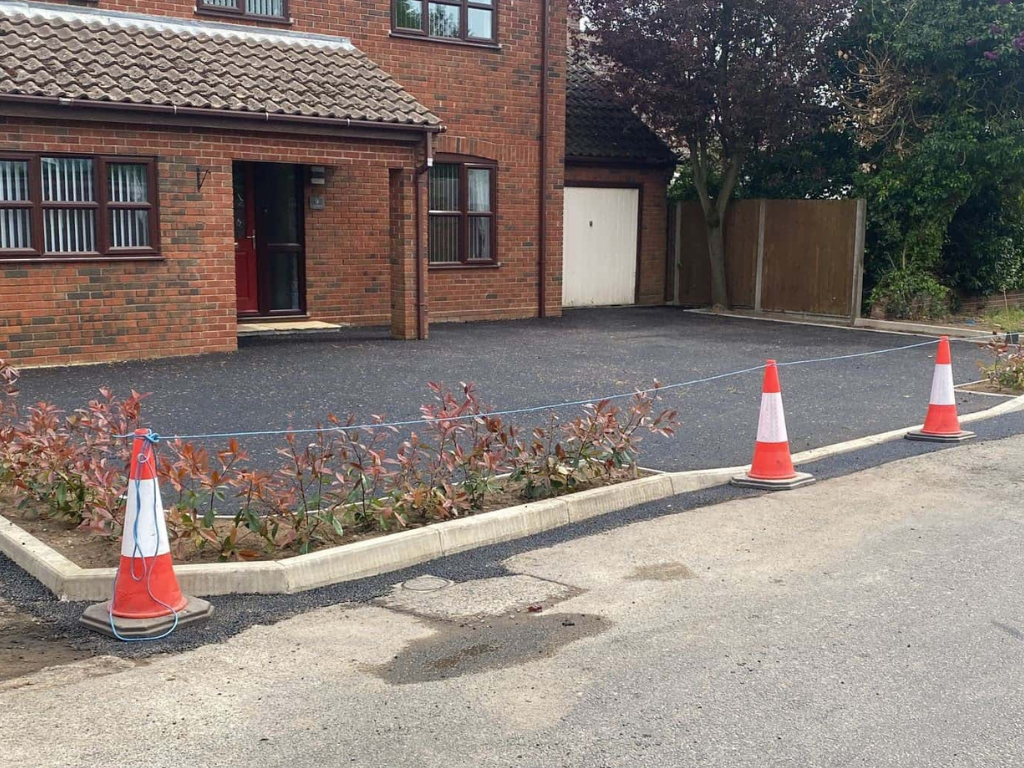
Most residential driveways are designed to accommodate everyday vehicles such as cars and occasional small vans. Although these surfaces generally experience lighter traffic than commercial areas, they still require proper preparation.
The installation should include a stable, well-compacted sub-base that provides consistent support. The thickness and specification of the construction layers should reflect the ground conditions and the vehicles expected to use the driveway.
Particular attention should be given to areas where vehicles regularly park or turn. Repeated pressure in the same locations can contribute to surface deformation if the underlying foundation is inadequate.
For homeowners in Stowmarket, a properly constructed residential tarmac driveway provides a practical surface for everyday access and parking.
Medium Traffic Loads and Frequent Vehicle Movements
Some private roads, shared driveways and business access areas experience more frequent use than a typical residential driveway. These locations may regularly accommodate cars, delivery vans and service vehicles.
Repeated vehicle movements place greater demands on the surface, particularly where vehicles turn, brake or follow the same routes throughout the day.
Installation requirements may therefore need to account for stronger foundation support and a suitable tarmac specification. The sub-base must be capable of distributing repeated loads without becoming unstable.
Drainage is also important. Water entering the foundation can weaken its supporting capacity, increasing the risk of rutting and cracking under regular traffic.
Heavy Traffic and Commercial Tarmac Surfacing
Areas used by larger or heavier vehicles require more careful consideration. Commercial yards, loading areas and access roads may need to support delivery vehicles, goods vehicles and other heavy traffic.
These vehicles place significantly greater loads on the surface, especially when stationary, turning or manoeuvring. A construction method suitable for occasional domestic traffic may not provide sufficient support for these conditions.
Heavy-duty tarmac installations may require:
- A more substantial foundation based on expected vehicle loads.
- Appropriate sub-base materials and thorough compaction.
- Tarmac layers specified for the intended traffic conditions.
- Careful preparation of turning, loading and braking areas.
- Effective drainage to prevent water from weakening the supporting layers.
The exact specification should be established through an assessment of the site, ground conditions and expected vehicle movements. Simply increasing the thickness of the surface material without addressing the foundation may not provide the required performance.
The Importance of Choosing the Right Tarmac Specification
The type and thickness of tarmac used can influence how well a surface performs under different traffic conditions. The appropriate material specification depends on the intended application, expected loading and construction design.
For example, a residential driveway may require a different surface course and construction depth from an area regularly used by heavy commercial vehicles.
The layers beneath the finished surface are equally important. A suitable base and sub-base help distribute pressure, reduce movement and provide a consistent platform for the tarmac.
Choosing the correct specification from the beginning helps avoid problems caused by a mismatch between the surface construction and its everyday use.
How Ground Preparation and Drainage Affect Durability
Even when the correct tarmac materials are selected, poor ground preparation can compromise the finished installation.
The existing ground should be assessed before work begins. Unsuitable material may need to be excavated, while the remaining formation should be prepared to provide a stable base. Sub-base materials must then be laid and compacted properly to create consistent support.
Drainage should also be considered as part of the overall design. Suitable surface falls help direct rainwater away, reducing the risk of standing water and moisture entering the underlying layers.
These preparation stages are essential for both light and heavy traffic areas, although the exact requirements will vary depending on the project.
Planning a Tarmac Installation Around Your Needs
Before installing a new tarmac surface, it is important to consider how the area will be used now and in the future. A driveway that currently accommodates only cars may eventually need to support larger vans or additional vehicle movements.
An experienced surfacing contractor can assess the ground, discuss the intended use and recommend a suitable construction approach. This helps ensure that the finished surface is designed around practical requirements rather than relying on a standard installation for every property.
Conclusion
Different traffic loads create different demands on tarmac surfaces. Residential driveways, shared access areas and commercial spaces all require suitable materials, foundation preparation and drainage arrangements to support their expected use.
For property owners and businesses in Stowmarket, Suffolk, Stowmarket Driveway Services can help identify the appropriate approach for a new tarmac installation. If you are planning a driveway or access surface, get in touch to discuss your requirements and the most suitable solution for your property.
Call us on: 01449 700 690
Click here to find out more about Stowmarket Driveway Services
Click here to complete our contact form and see how we can help with your driveways.